CAVenir #19: Affective AI & Emotional Intelligence
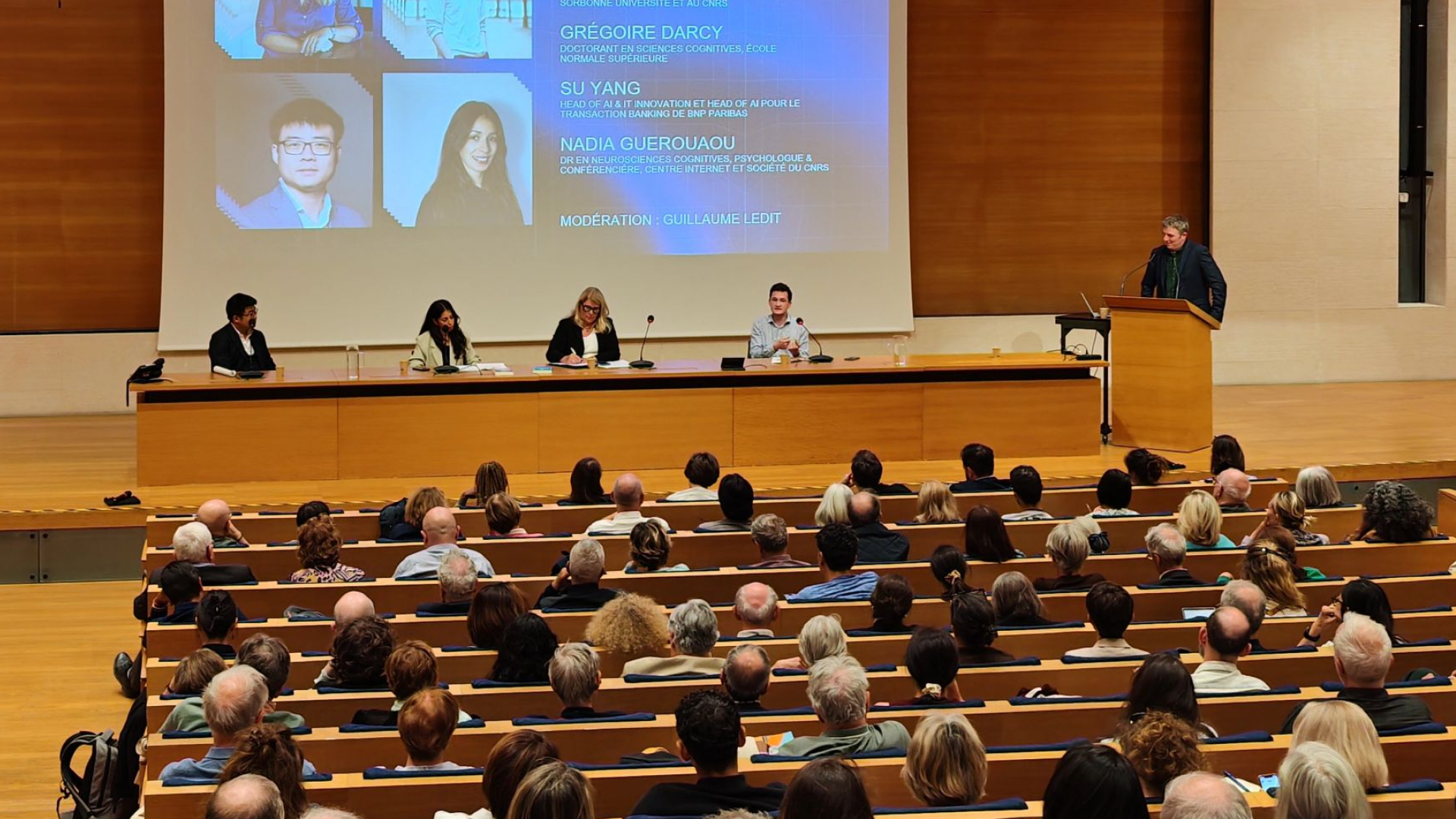
At the Conversations à Venir conference, co-organized by the Institut Louis Bachelier and the BNP Paribas Foundation, researchers, psychologists, and practitioners came together to demystify affective AI and explore the challenges it raises.
Here are some key takeaways from the discussions:
- Emotional AI is almost 30 years old. It did not begin with ChatGPT; the first work on affective computing dates back to 1997. What has changed is the amount of available data and the increasing sophistication of the models.
- Detecting is not the same as feeling. AI can analyze our emotions (through voice, facial expressions, and physiological rhythms) and even mimic them, but without qualia—the subjective experience that characterizes our inner life. As Laurence Devillers puts it: “Machines imitate humans without feelings and without intentions.”
- We have moved from an interface to an interlocutor. With LLMs, our relationship with machines has changed profoundly. But we should not confuse quality of communication with quality of judgment.
- From cutting-edge science to everyday life. Emotional filtering in call centers, artificial smiles to enhance creativity, subliminal acoustic manipulation… Nadia Guerouaou explained how technologies are initially developed to address real problems, then deployed at scale—and this is where ethical issues emerge.
The main lesson: As Grégoire Darcy emphasized, AI is a pharmakon—both a remedy and a poison—and it is up to us to use it wisely. Learning to live with AI means understanding it, educating ourselves, teaching our children, and resisting the temptation of fascination.
Many thanks to the speakers—Laurence Devillers (Sorbonne University), Grégoire Darcy (ENS), Nadia Guerouaou (CNRS), Su Yang (BNP Paribas), Guillaume Ledit, Isabelle Giordano, and Marie Brière—for providing this valuable opportunity to step back and reflect.
You can listen to the conference recording here:
https://on.soundcloud.com/TAxZoUd6d506j4ViBS