Institute
louis
Bachelor
louis
Bachelor








How can we better understand the economic strategies of actors along the real estate value chain? How can environmental challenges be integrated into the economic models of urban projects beyond traditional approaches to green finance?
These questions are at the core of the synthesis of the third scientific workshop of the Chair in Economics of the Urban Ecological Transition, organized in partnership with the United Nations Environment Programme (UNEP).
Led by Ingrid Nappi, economist and professor specializing in real estate and urban economics, the Chair aims to bring academic research, professional expertise, and public decision-making closer together in order to support the transformation of cities in the face of climate challenges.
Launched in September 2023 within the Fondation du Risque of the Institut Louis Bachelier, in partnership with the École nationale des Ponts et Chaussées and the École nationale supérieure d’Architecture de Paris-Malaquais, the Chair in Economics of the Urban Ecological Transition is built around four complementary pillars: real estate, housing, architecture, and urban planning.
Under the scientific direction of Ingrid Nappi, it develops a research and teaching platform dedicated to analyzing the economic models of low-carbon cities. Its objective is to better understand the functioning of the urban production value chain in order to identify levers that reconcile economic performance, ecological transition, and territorial resilience.
One of the distinctive features of the Chair is its ability to bring together, within the Institut Louis Bachelier, all stakeholders involved in the built environment: researchers, local authorities, investors, developers, architects, urban planners, engineering consultancies, and infrastructure specialists. This transdisciplinary approach fosters dialogue between actors who often operate in silos.
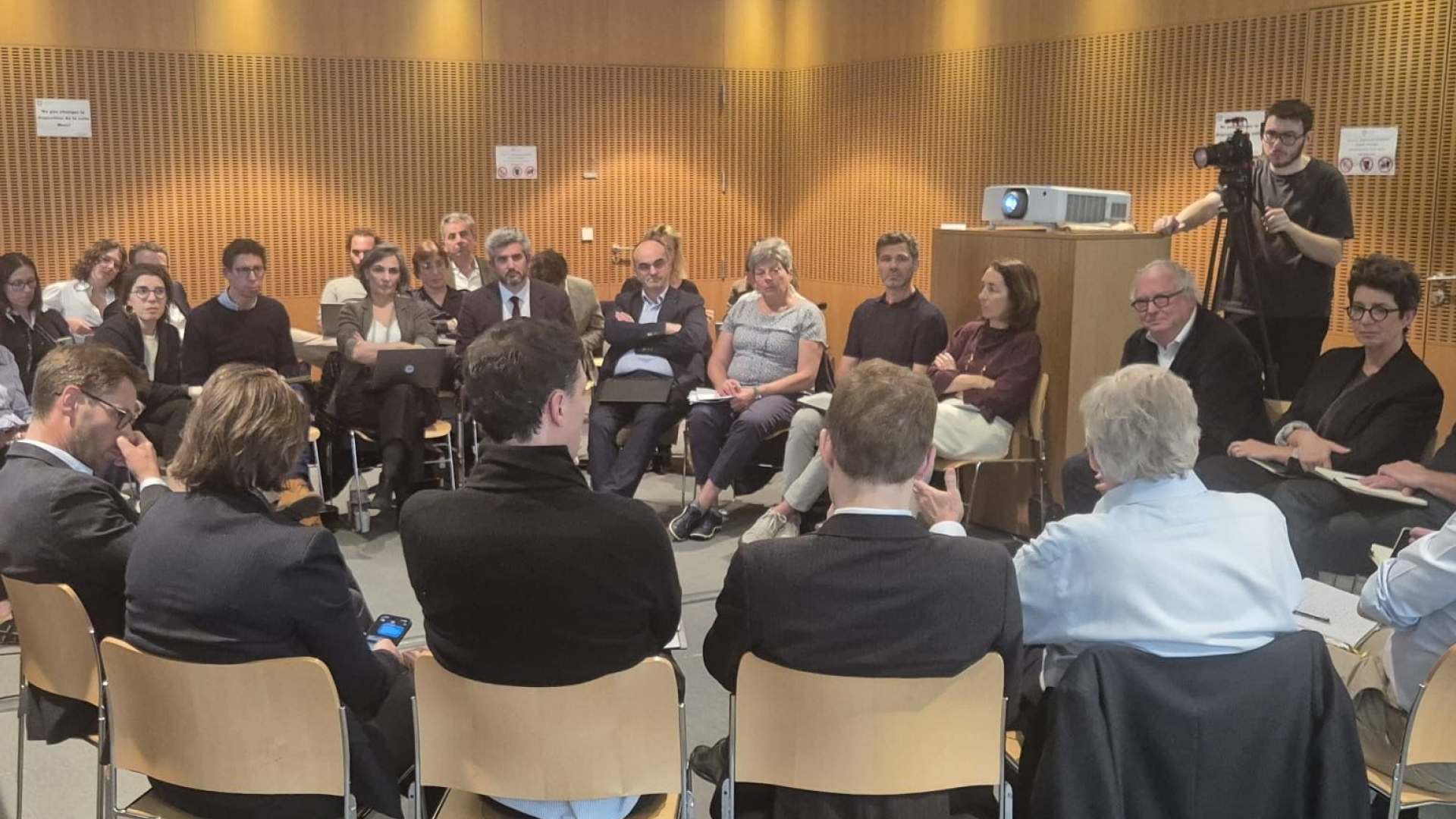
The third scientific workshop brought together researchers, real estate professionals, and economic stakeholders to analyze how risks are perceived, allocated, and compensated throughout the lifecycle of urban development projects.
The discussions highlighted a highly fragmented value chain. Each actor intervenes at a specific stage of a project, with its own constraints, responsibilities, timelines, and economic, financial, technical, or regulatory risks.
This structure generates misunderstandings between project owners, designers, developers, planners, and investors, particularly when environmental ambitions come into tension with the economic equilibrium of projects.
Beyond risk analysis, the workshop opens a broader reflection on how to integrate genuine ecological value into urban economic models.
The discussions encourage moving beyond the narrow notion of “green value,” currently largely framed by the European taxonomy, in order to better account for the environmental, social, and territorial benefits generated by urban projects.
This perspective is one of the major research directions of the Chair, which aims to develop new economic frameworks adapted to the challenges of the ecological transition.
Through its workshops, seminars, and research activities, the Chair in Economics of the Urban Ecological Transition reaffirms its mission: to create a space for dialogue between economists, financiers, engineers, architects, and policymakers, in order to produce knowledge that can directly inform the transformation of territories.
This third synthesis fully illustrates this ambition by offering a renewed perspective on value creation mechanisms in urban and real estate projects, and by highlighting the need for a deeper understanding of the strategies and constraints of each stakeholder to build sustainable economic models.
The synthesis and associated videos are now available and provide a valuable resource for professionals and researchers engaged in the ecological transition of cities: https://www.chaire-transition-ecologique-urbaine.org/productions/workshops/workshop_3.php