Institute
louis
Bachelor
louis
Bachelor



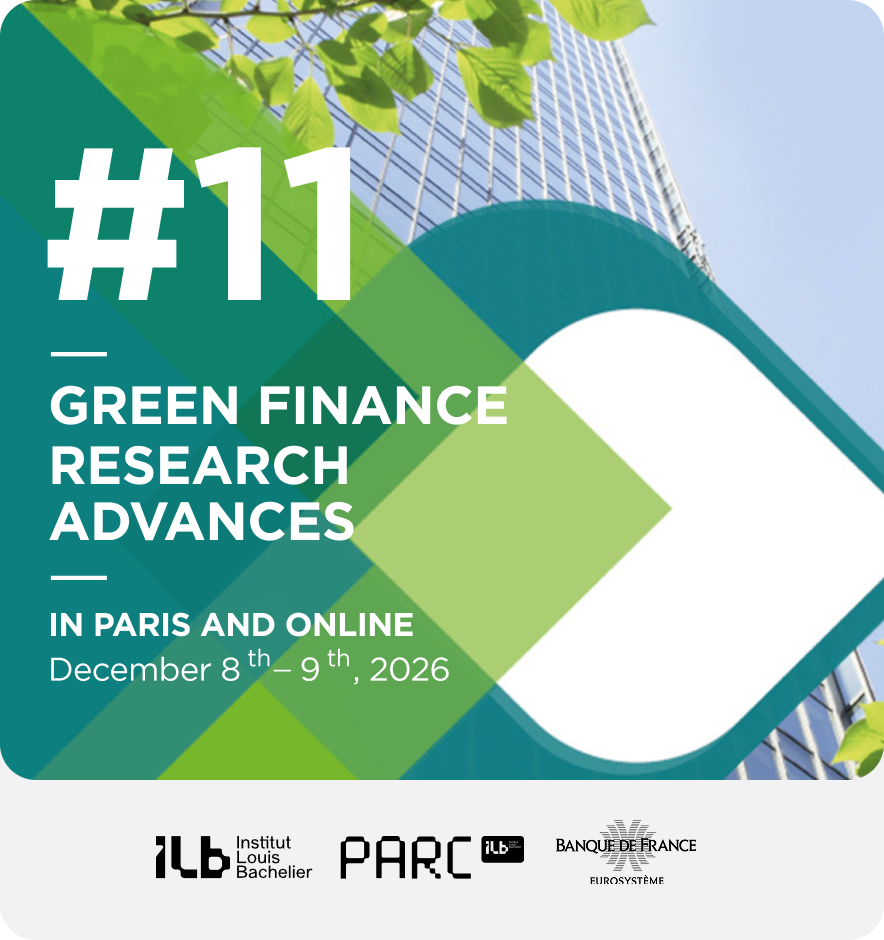


Research Director at INRAE, Philippe Delacote is one of the senior members of the Climate Economics Chair. From tropical forests to agriculture and climate, he has broadened his research topics over the years, with one constant: the importance placed on mentoring doctoral students.
Interview.
I am an economist by training, and I became interested in development economics very early on, particularly in the Global South. This naturally led me to environmental economics, initially focusing on issues of tropical deforestation. I then gradually expanded my work to include agriculture and climate.
It was the founder of the Climate Economics Chair, Christian de Perthuis, who invited me to join shortly after it was created. I was 32 at the time, and it gave me the opportunity to mentor doctoral students quite early in my career. This has greatly influenced my way of working: mentoring PhD students has become central to how I conduct research. I strongly believe in the exchange of ideas and the complementarity of skills. The Chair, with its ecosystem and the regular influx of new doctoral students, now forms the foundation of my work.
It often happens quite simply: when I find an angle that allows me to contribute my perspective as a researcher to current political, climate, or economic issues, I start by drafting an initial version of an op-ed, with the goal of being accessible to a wide audience. There is no intention of getting into overly technical approaches. Then, depending on the subject, I might suggest that a colleague contribute a complementary viewpoint to mine. That is how the article on resilience, written with Anna CretiandPhilippe Quirion, came about. Their perspectives on energy and climate policy helped broaden the discussion beyond my own field of research.
First, you have to understand that resilience is broken down into three pillars: exposure, vulnerability, and the capacity to bounce back. Are we exposed to a risk? If so, what damage will it cause when it occurs? And after the shock, are we capable of quickly returning to a satisfactory situation?
If this concept is becoming so important today, it is because we are seeing a multiplication of crises—climate, agricultural, energy, geopolitical—that we often manage separately. However, that is no longer enough.
We must now think about them in a more systemic way and make the pursuit of resilience a structural element of our individual and collective decisions.
This requires moving beyond a purely individual approach to resilience in favor of collective strategies. Certain individual practices may make sense for the households or businesses implementing them, yet have negative effects on our collective resilience.
Take the example of water used for agriculture: building storage infrastructure, such as reservoirs, may secure water access for the farmers who use them, but it can also reduce availability for other users, ecosystems, and the soil. The pursuit of resilience must therefore evaluate the consequences of our choices, including their indirect effects, and promote collective strategies that help limit their negative impacts.