Institute
louis
Bachelor
louis
Bachelor








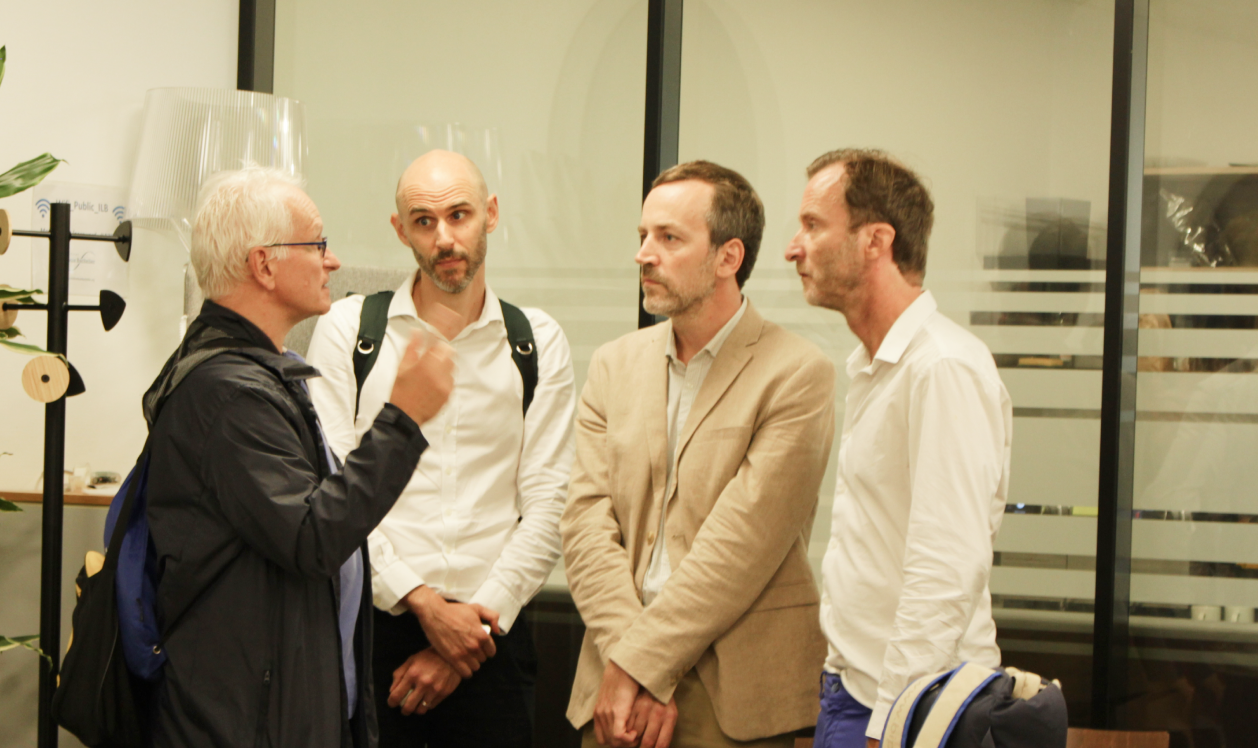
On September 14, Peter Tankov, Scientific Director of the PARC Foundation and head of the quantitative finance program at ENSAE, hosted a roundtable titled "Teaching Quantitative Finance in the Era of Generative AI," bringing together faculty members leading quantitative finance programs and professionals involved in developing generative and agentic AI within their institutions.
This roundtable was prompted by the realization that generative AI is already profoundly transforming both teaching practices and the professional future of students.
Here are the three key takeaways from the event:
- The role of the quant is not disappearing, but a profound transformation is already underway. The core of the profession is shifting toward designing robust tests, conducting in-depth verification, and deploying AI within the constrained environment of a bank. While AI significantly reduces production costs, human validation remains essential. Understanding data, identifying algorithmic limitations, and designing financially viable solutions remain critical.
- The persistence of these roles, however, does not guarantee the survival of traditional entry paths: by automating tasks typically assigned to beginners, AI may reduce demand for junior staff and weaken the transfer of skills. Two solutions were proposed: raising the initial skill level of graduates and supporting apprenticeships.
- Finally, adapting curricula is a major challenge. It is vital to maintain high standards, a commitment to hard work, and a strong grasp of mathematical fundamentals. Regarding assessment, one principle must remain clear: students are ultimately responsible for their work, regardless of whether they used AI assistance.
Thank you to all the participants, and in particular to the heads of the quantitative finance programs in Paris: Gilles Pagès, Charles-Albert Lehalle, Olivier Guéant, Stephane Crepey, Huyên Pham, Elise Coudin, Roxana Dumitrescu, Ahmed Kebaier.
You can download the summary of this roundtable discussion here.