Institute
louis
Bachelor
louis
Bachelor








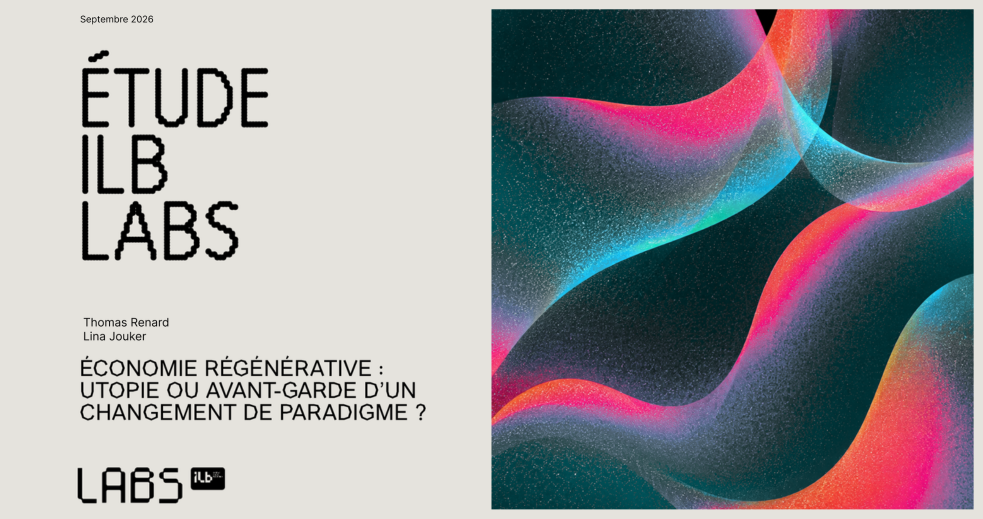
Regenerative economy is gaining increasing interest in academic, economic, and financial debates. By proposing to move beyond traditional approaches to sustainability as we know them today, it invites us to rethink the role of economic activity and growth in relation to planetary boundaries, ecosystem restoration, and the conditions for truly sustainable prosperity.
This document analyzes the theoretical foundations of what we define as a regenerative economy, the mechanisms that could support its implementation, and the implications of this paradigm shift for sustainable finance. It examines the main tensions surrounding this approach and initiates a reflection on the institutional and social transformations it entails.
Thomas Renard is a sustainable finance analyst at the Labs, the research and development unit of the Institut Louis Bachelier.
Lina Jouker is a senior sustainable finance analyst at the Labs, the research and development unit of the Institut Louis Bachelier.
The Institut Louis Bachelier is a partnership-based research network in economics and finance, created in 2008 to strengthen ties between the academic world, businesses, and public authorities. Building on the pioneering work of Louis Bachelier, the father of modern quantitative finance, it now brings together more than 60 research chairs and programs involving nearly 1,000 researchers focused on major issues in economics, finance, risk, and environmental and societal transitions. Its mission is to produce excellent scientific research and facilitate its transfer to public and private decision-makers.
The authors would like to extend their sincere thanks to Iyas Aït Benhiba and Emma Gastineau, experts in regenerative finance, for the time they dedicated to us during the interviews conducted for this work. The richness of their insights, their expertise, and their reflections have greatly contributed to deepening this analysis.